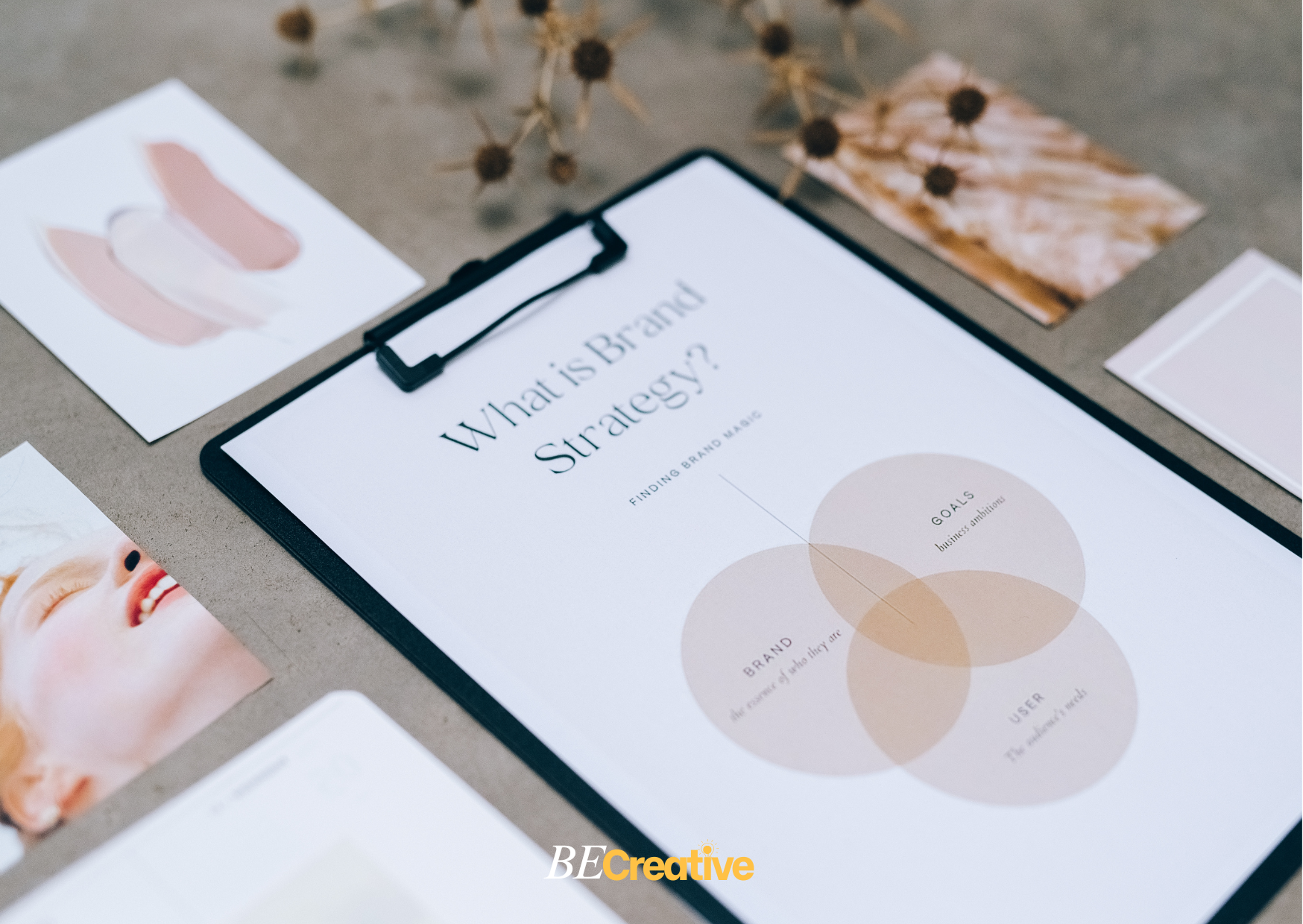
Ask ten marketers what a brand strategy is and you’ll get ten different answers. Ask a small business owner and you’ll usually get a polite shrug followed by “something to do with the logo?”
A brand strategy is not a logo. It’s not a colour palette. It’s not even your visual identity, although all of those things flow from it.
Here’s what it actually is — and what goes into one.
The short version
A brand strategy is the thinking behind how your business presents itself and communicates. It’s the answers to questions like: What do we stand for? Who are we talking to? Why would someone choose us over someone else? How do we want people to feel when they interact with us?
Done properly, it gives everyone involved in your business — including you — a clear framework for making decisions. What to write on your website. What tone to use in emails. Which clients to say yes to, and which to politely pass on.
What goes into a brand strategy
1. Purpose and values
Why does your business exist beyond making money? What do you genuinely care about in your work?
This isn’t about writing a mission statement that sounds impressive and then forgetting about it. It’s about getting honest about what drives your business and using that to shape how you show up.
2. Target audience
Who are you actually trying to reach? Not “anyone who might need what I offer” — that’s not an audience, that’s a wish. A proper audience definition gets specific: what does this person do, what do they struggle with, what do they care about, and what kind of language do they use?
The more precisely you can describe your ideal client, the easier everything else becomes.
3. Positioning
Where do you sit in your market? What makes you different from the other people doing what you do?
This isn’t about claiming to be “the best” or “the most passionate” (everyone says that). It’s about identifying what genuinely sets you apart — your approach, your experience, your specialism, the specific clients you serve — and owning it.
4. Brand personality and tone of voice
If your brand were a person, what would they be like? Professional and measured? Warm and chatty? A bit irreverent and funny?
Tone of voice is the one most businesses skip, and it shows. When your website sounds nothing like your Instagram, which sounds nothing like your emails, it creates a slightly off feeling that’s hard to name but very easy to feel.
5. Visual identity direction
This is where the logo, colours, and typography come in — but as an expression of everything above, not as the starting point. Good visual identity flows from the personality and positioning. That’s why rebranding without doing the strategic work first often produces something that looks pretty but still doesn’t feel quite right.
6. Messaging framework
The key things you want to communicate, the language you use to say them, and how they change depending on who you’re talking to. Your homepage headline, your elevator pitch, your Instagram bio — these should all come from the same source of truth.
Do small businesses actually need this?
Yes. But it doesn’t have to be a 40-page document from a big agency.
For a small business, a clear, usable brand strategy might be six pages. It might come out of a half-day working session. What matters is that you’ve done the thinking, written it down, and can refer back to it when you’re wondering what to post or how to write about yourself.
Without it, most businesses end up making ad hoc decisions that slowly pull things in different directions. The website says one thing. The social media says another. The person you are on a sales call is slightly different again. It adds up to a brand that feels a bit muddled — even if each individual piece looks fine on its own.
Where to start
If you’ve never done this kind of thinking, the best place to begin is with your customers. Who are your favourite clients? What were they struggling with before they worked with you? What did they say when things went well?
That’s the raw material of a brand strategy. The rest is structure.
If you’d like help working through this, get in touch and we can talk about whether a brand strategy session makes sense for where your business is right now.